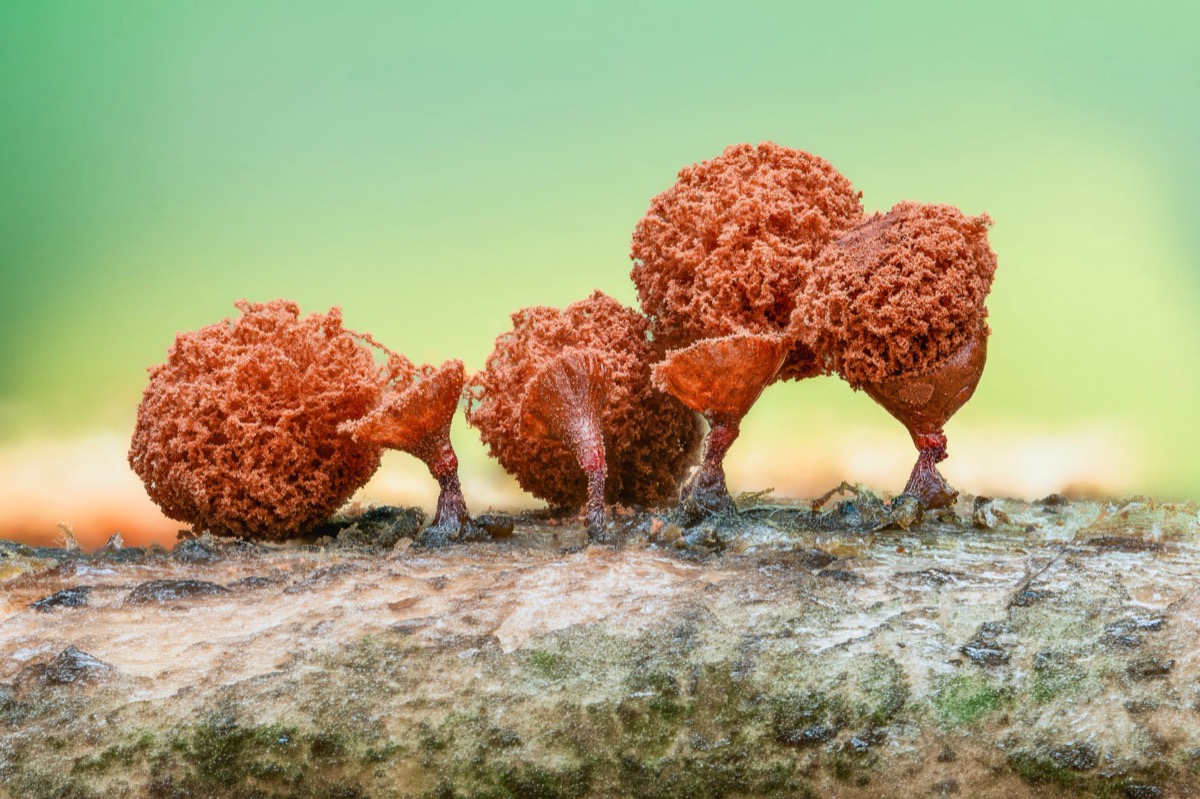
Yellow mold on mulch
Understanding Wood Mulch
Wood chips and bark nuggets are commonly used as mulches in landscapes. Organic mulches provide many benefits to landscapes.
These benefits include stabilizing soil, moderating soil temperature, retarding weed development, and reducing soil moisture evaporation. They also enhance the aesthetic qualities of landscapes.
Landscape contractors may produce their own wood mulches by grinding branch prunings, dead trees, and wood wastes. Mulch materials are also obtained from sawmills and pulping operations.
The Problem of Sour Mulch
A significant, though rare, problem can occur when using previously stockpiled wood by-products for mulching. This issue is referred to as sour mulch.
Wood mulch storage techniques can significantly affect the product's quality.
Impacts of Sour Mulch on Plants
Sour mulch can cause rapid plant wilting. Foliage on plants like tulips, Phlox, Astilbe, and violets may turn white or light tan.
Adjacent turf can also be affected by sour mulch. For accurate measurements when planning your landscaping, you can use a free mulch calculator.
Key takeaways
- Wood mulches offer benefits like soil stabilization, temperature moderation, and weed reduction.
- Poor wood mulch storage can lead to a rare problem called sour mulch.
- Sour mulch can cause plants to wilt and foliage to discolor rapidly.
- The overall quality of mulch is significantly affected by its storage techniques.
Related tools
Estimate materials with our free mulch calculator on MulchCalcs.